At a glance
- In a 2013 study of more than 19,000 people aged 18 to 68, people reported changing a great deal over the past decade but predicted relatively little change over the next.
- People said they would pay about 61% more to see today's favorite band perform in ten years than others would pay to see their favorite of ten years ago perform tonight.
- Critics question the design and the math, and adult personality does settle somewhat, so read the gap as an estimate. For hard-to-undo choices, lean on what has lasted.
In this essay
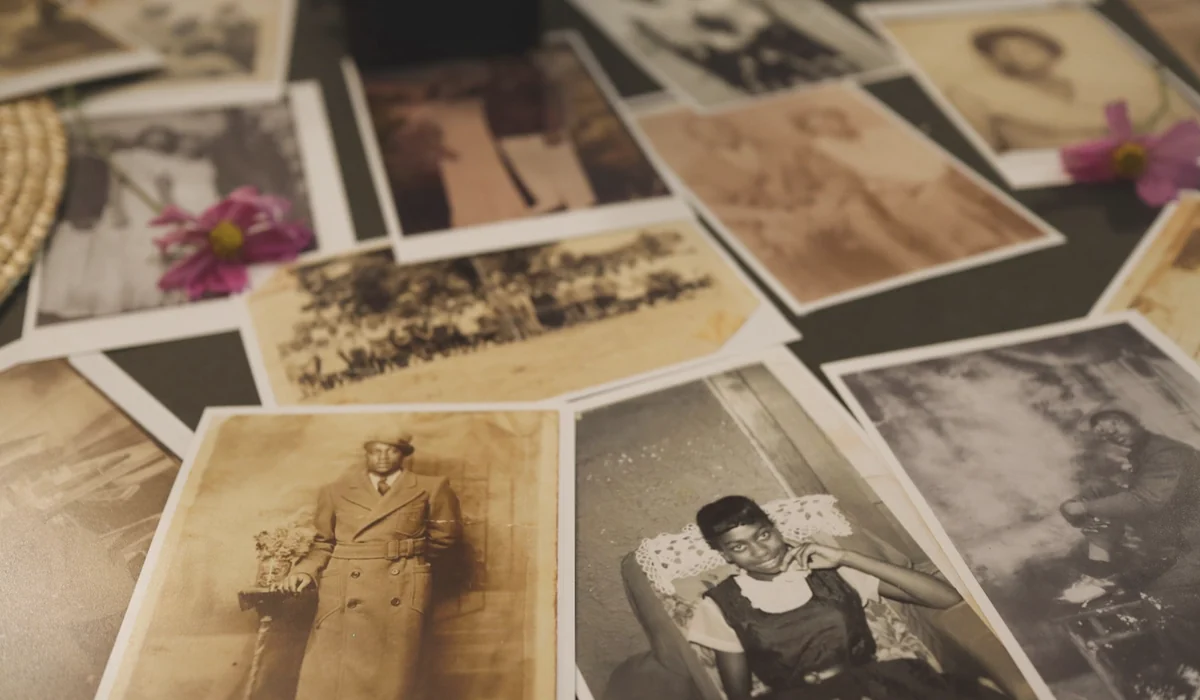
Scroll back far enough in your phone’s photos and you’ll meet someone you half recognize. The haircut. The puffer vest you wore to everything. The caption you would never write now. You wince, close the app, and go back to being who you are today: the person who has taste now, knows what matters, and finally sounds like you.
That last step is a quiet mistake, and a common one. You admit the old you was a draft. Then you assume the current you is the final copy. So you sign the long lease, pick the career track, or book the tattoo as if the person living with it in ten years will want exactly what you want tonight.
Read to the end and you’ll understand why your current tastes and values feel permanent, and how to make big decisions that your future self is less likely to regret.
The rearview mirror problem
Here is one way to think about it. Change you remember is easy to see. Change you have to imagine is hard to see. So the past looks crowded with change, and the future looks strangely still.
Think about a long drive. In the rearview mirror, every town you passed sits behind you in order, each one a landmark. Through the windshield there is only road, smooth and blank until you reach it. No driver concludes the trip ends at the next hill. With our own lives, though, we come close to drawing that conclusion.
Why does the road ahead look so empty? You know how your music, friends, and opinions shifted over the past ten years, because you lived each shift. The next ten years come with no such details. You can’t picture the friend you haven’t met or the job that doesn’t exist yet. With nothing specific to imagine, the easiest forecast is “more of this.” The present fills the blank.
You don’t have to believe this yet. A large study put numbers on it.
Nineteen thousand people, two questions
In 2013, psychologists Quoidbach, Gilbert, and Wilson published The End of History Illusion in Science. They measured the personality traits, core values, and everyday preferences of more than 19,000 people aged 18 to 68. Each person was asked one of two things: how much they had changed over the past decade, or how much they would change over the next one.
The pattern was consistent. People reported that they had changed a great deal in the past decade, but predicted they would change relatively little in the next. The same gap showed up at every age tested, from people in their 20s to people in their 60s. According to Wikipedia’s summary of the paper, the team ran six separate studies across personality, values, and preferences.
One test made the gap concrete. Some participants were asked how much they would pay today to see their current favorite band perform in ten years. Others were asked how much they would pay today to see the band that was their favorite ten years ago perform tonight. The first group said they would pay about 61% more, as the BPS Research Digest reported.
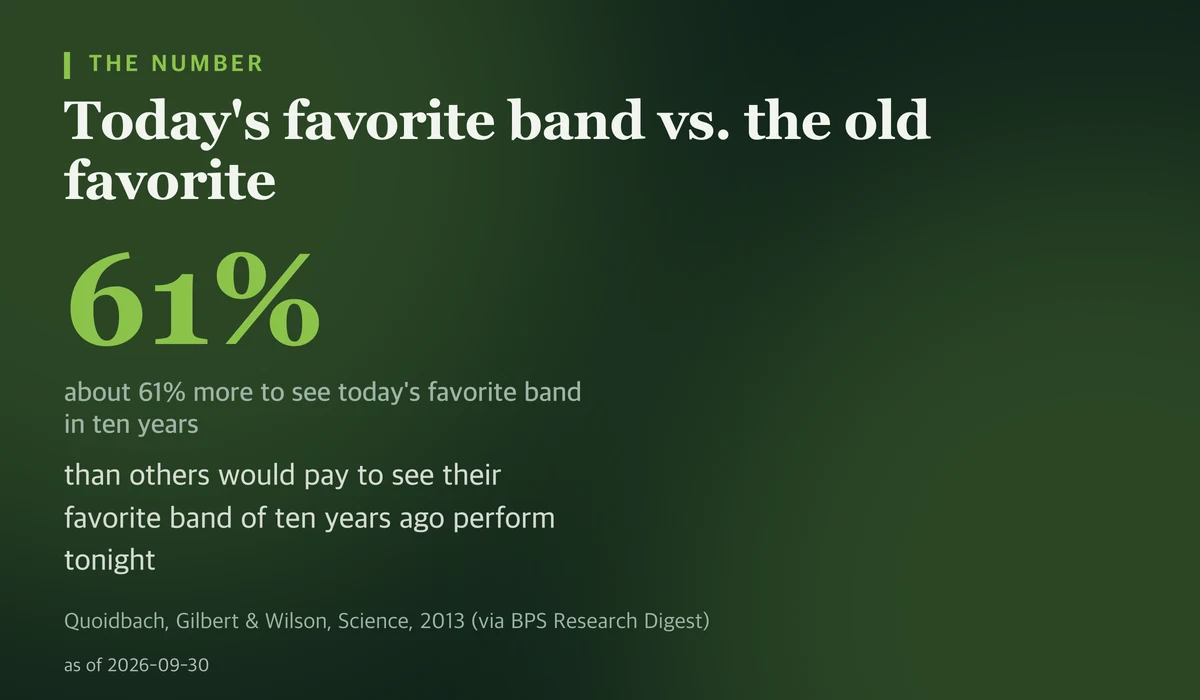
One way to read this: people put a premium on today’s taste a decade out, and discounted a taste they had once loved. Gilbert, one of the authors, put the pattern this way:
Middle-aged people — like me — often look back on our teenage selves with some mixture of amusement and chagrin. What we never seem to realize is that our future selves will look back and think the very same thing about us.
Notice what the study did not claim. It did not say you will become a stranger to yourself. It found that people’s forecasts of change were smaller than their reports of past change.
Deciding for someone you haven’t met
First: price the exit
Before a long commitment, ask what it would cost to undo. Picture a tattoo shop on a Saturday afternoon. The design is a lyric from the band you’ve played all year. Remember the concert test: today’s favorite band drew the higher price. That doesn’t mean skip the tattoo. It might mean choosing a size and a spot you could live with if the song turned into background noise.
What changes is the question. Not “Do you love this?” You obviously do. The better question is “Could you live with it if you stopped?”
Second: lean on what has already lasted
The parts of you that survived the last ten years are better bets than the parts that arrived last year. At the kitchen table, list what you cared about a decade ago. Some items will still hold: you still want to live near your sister, still get restless at a desk all day, still guard quiet weekends. Those have already come through one decade of change. Newer passions, like the sourdough starter or the city you visited twice, may last too. They just haven’t shown it yet.
What changes: when a decision rests on something with a long track record, you can commit harder. When it rests on something new, build in more room.
Third: leave a note for whoever inherits it
Write down why you made a big decision, in plain words, for the person who will live with it. Say you turn down a promotion because you want your evenings back. Open your notes app and write the date, what you chose, and what you were weighing. That person may want different things in ten years. At least they won’t have to guess what you were thinking.
What changes: it’s easy to judge an old choice by what you learned later. A note lets your future self judge it by what you knew then.
The other side
Does all this mean the study settled the question? Not quite. Careful readers have pushed back in three ways.
First, the design. The study was cross-sectional: it compared different people of different ages at one moment, instead of following the same people for years. The “past change” half also rests on people’s own memories of how much they changed, and one critic writing in Psychology Today noted that those memories are open to bias. People may overstate how different they used to be.
Second, the math. Mathematician Jordan Ellenberg argued that part of the gap may be a statistical artifact rather than a bias. The size of a change you already made and the expected change ahead are different quantities. Roughly: you know which way you moved, but you don’t know which way you’ll move, and possible moves in opposite directions partly cancel in an average forecast. A fully rational forecaster could give the same pattern of answers.
Third, adults really do settle. In a separate long-term study that followed one large group from childhood into midlife, personality-trait correlations over about three years were only about .36 to .55 in childhood, versus about .70 to .79 across a similar span in adulthood. In plain terms, adults hold their place on traits, relative to others, more steadily than children do. The feeling of having settled is not pure illusion.
So the fair claim is narrower than “everything about you will keep changing.” Your sense of how much you’ll change may run small, and this study offers one estimate of the gap, not a verdict. For a decision that’s hard to undo, that is still worth weighing.
Try this today
Pick one decision sitting on your list this week: the lease, the course, the move. Then take three small steps.
- Find one thing from about ten years ago, like an old photo, email, or playlist. Write down three things that person was sure of.
- Circle the ones that are still true. That’s your track record.
- Look at the decision and ask whether it rests on what has lasted or on what arrived this year. If it’s the second, find one way to make it easier to undo: a shorter term, a smaller size, a trial month.
It takes ten minutes, and the decision will still be there when you’re done.
Part of why your current tastes and values feel permanent may be simple. You can see every change behind you and none of the ones ahead. You don’t have to predict who you’ll become to decide well for that person. You only have to leave some room in the choices you can’t easily take back, for someone who may want something a little different.
You can see every change behind you and none ahead, so leave a little room in the choices you can't easily undo.