At a glance
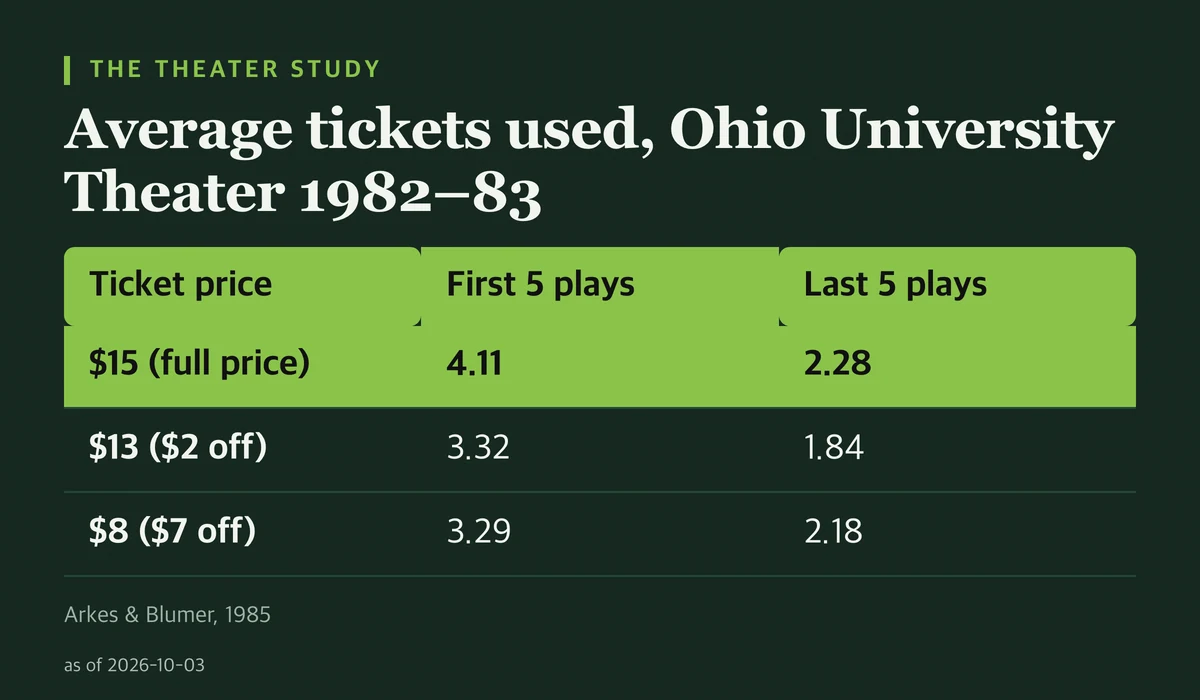
- In a 1982–83 Ohio University study, full-price season-ticket buyers used more tickets in the first five plays than discount buyers; later in the season the groups did not differ significantly.
- A 1999 review argued there is no clear evidence of the sunk-cost pattern in non-human animals; a 2016 pigeon study found it only after a specific learning history.
- One question can help: if this had been free, would you still choose it right now?
In this essay
It’s 7:15 on a wet Thursday, and a $15 theater ticket is sitting on the kitchen counter. You’re tired. The reviews were lukewarm. Soup and an early night sound better than anything on that stage. You reach for your coat anyway, because you paid for it.
Most of us make some version of this move every week. We finish the dull book, keep going to the class we stopped enjoying, sit through a movie we’d have switched off if it were free. The reason is nearly always the same: it would be a waste not to.
That sentence deserves a closer look. By the end, you’ll know why money already spent keeps pulling at your decisions, where that pull seems to come from, and one question that separates real commitment from sunk-cost drift.
The receipt is taped to both doors
Picture the evening as two doors. Behind one, you go to the play. Behind the other, you stay home. Now picture the $15 receipt taped to both. Whichever door you open, the money is spent.
That’s all a sunk cost is: money, time or effort you can’t get back, whatever you do next. Because it sits behind every door, it can’t tell you which door is better. Only the things that differ can — how the evening will feel, what it costs from here, who is waiting for you.
So why does the receipt seem to hang on only one door? Most of us learned early that wasting is bad. Finish your plate. Use what you bought. Most days, that’s a sound rule. The trouble starts when it fires after the money is already gone, and “don’t waste it” slides into “don’t admit it was wasted.”
What a theater season showed
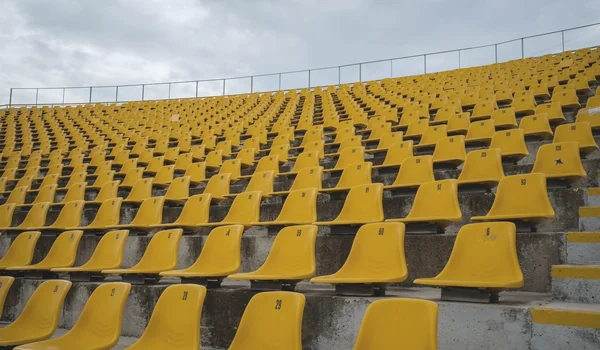
The cleanest test came from a box office. In the Ohio University Theater’s 1982–83 season, the first 60 people to buy season tickets were randomly sold one of three versions: full price at $15, a $2 discount at $13, or a $7 discount at $8. Same season. Only the price differed.
Arkes and Blumer then tracked which tickets got used. Over the first five plays, full-price buyers used 4.11 tickets on average, against 3.32 and 3.29 for the two discount groups. Next to the $2-discount group, that’s 4.11 minus 3.32, or about 0.8 of a play more per person, over a $2 difference in price. In the last five plays, the three groups did not differ significantly (2.28, 1.84 and 2.18). The authors say the effect lasted about six months after purchase and was not present in months 6 to 9.
Questionnaires in the same paper told a similar story. Asked whether to spend the last 10% of funds on a radar-blank plane when $10 million was already spent, 41 of 48 people said yes. Asked whether to start the same plane with a fresh $1 million and nothing spent yet, only 10 of 60 said yes.
The authors also cite earlier work (Staw, 1976) in which people who felt personally responsible for an unsuccessful decision kept investing more. They read this as a sign that admitting the earlier money was wasted is itself aversive. Their paper opens with a line attributed to Senator Denton, dated November 4, 1981, about the Tennessee-Tombigbee Waterway:
To terminate a project in which $1.1 billion has been invested represents an unconscionable mishandling of taxpayers’ dollars.
The sentence points only backward. It names what has been spent, not what finishing would cost or return.
The pattern also has a nickname from aviation. Concorde’s development was originally estimated in 1962 at about £70 million. By the time commercial flights began in 1976, the programme had cost over £1.3 billion and was three years behind schedule. In 1969, the British Cabinet postponed any decision to withdraw from the Concorde treaty and slowed research and development funding. Those records show what was decided, not why.
Then comes the twist. In a 1999 review, Arkes and Ayton asked whether animals fall for the “Concorde fallacy.” As a 2016 pigeon study by Fujimaki and Sakagami summarizes, they argued there is no clear evidence of it in non-human animals, and that apparent cases can be explained by future costs and benefits rather than past investment. One way to read this: the pull isn’t a shortage of brainpower. It may be a learned rule — don’t waste — applied one step too far.
Three ways to loosen the pull
First: ask the free-ticket question
Before you continue something, ask whether you’d still choose it right now if it had been free. Say it’s Saturday morning, and you’re signed up for a pottery class you paid for in March. Picture the same class offered to you today at no cost. Would you get in the car?
The question removes the receipt and leaves everything else in place. A friend waiting at the studio still counts. So does a cancellation fee, because that’s a future cost, not a sunk one. If a reason survives the question, that’s commitment. If the only reason left is the receipt, that’s drift.
Second: count the waste you can still avoid
The money is already lost. What you can still waste is the next hour, the next dollar, the next weekend. In another Arkes and Blumer questionnaire, students were told they had paid for a $100 ski trip to Michigan and a $50 trip to Wisconsin, and that they would enjoy Wisconsin more. Only 46% chose Wisconsin. The authors take this to show the larger sunk cost pulling choices toward Michigan.
Think of a rented movie that has gone flat by the 40-minute mark. Finishing it doesn’t refund the rental. It spends another hour. When you move the word “waste” onto what is still at stake, the better choice is often easier to see.
Third: expect the pull to be loudest early
In the theater study, the gap showed up in the first half of the season and was gone by months 6 to 9. The timing suggests the pull may be strongest while a purchase is fresh — the gym membership in its second week, the course you bought last Sunday.
That’s when the free-ticket question earns its keep, so write it where the decision happens: on the calendar entry, on the ticket itself. Knowing the textbook rule may not be enough. In the ski-trip questionnaire, students who had taken economics chose at rates similar to those who hadn’t.
The other side
The animal story is less tidy than it sounds. In that 2016 pigeon study, the sunk-cost pattern did appear, but only in the condition where birds had been reinforced after investing in the more costly option. Without that history, the pigeons chose rationally. So “animals never do it” overstates the case. What seems to matter is the learning history, not the species.
Continuing can also be the right call, because quitting has costs of its own. The same Concorde record includes an Attorney General assessment that there was a “fifty-fifty chance” of incurring “unacceptable costs” if Britain withdrew unilaterally. That reason points forward, not backward.
Bornstein and Chapman make a subtler case. In their scenarios, people rated “learn a lesson” as a reason to stick with a failed plan, and rated it higher when the original decision had been careless and a large sum had been invested. They argue this can be “meta-rational” when the lesson is worth more than the cost of staying with the plan. Their participants still rated plain waste-avoidance above it as a reason to continue.
Finally, the theater effect was not uniform. It faded after about six months. And when Arkes and Blumer tested personal involvement as a driver, the support was equivocal; for two of those experiments they draw no firm conclusions. The “admitting waste hurts” reading is plausible, not settled.
Try this today
Pick one thing you’re keeping mainly because you paid for it. A half-read book. A class. A plan you bought into back in spring.
Then take three small steps. Name it, out loud or on paper. Ask the free-ticket question: if this had been free, would you still choose it right now? Act on the answer for one day — skip it without guilt, or do it on purpose because you still want it.
Try it for one day. Not forever. One day.
Sounds too simple? It is, and that’s the point. The receipt is taped to both doors, so the money is gone whichever way you go. The pull you feel seems to come from a good rule, don’t waste, firing after the waste has already happened. And one question tells commitment from drift: if your reason would still stand had the thing been free, keep going. If it wouldn’t, the ticket can stay on the counter.
If this had been free, would you still choose it right now? Let that answer decide, not the receipt.